
[Details obscured due to NDA]
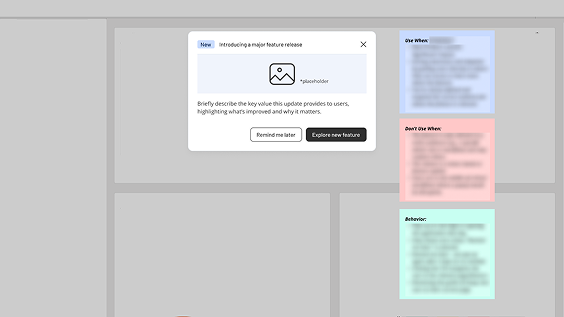
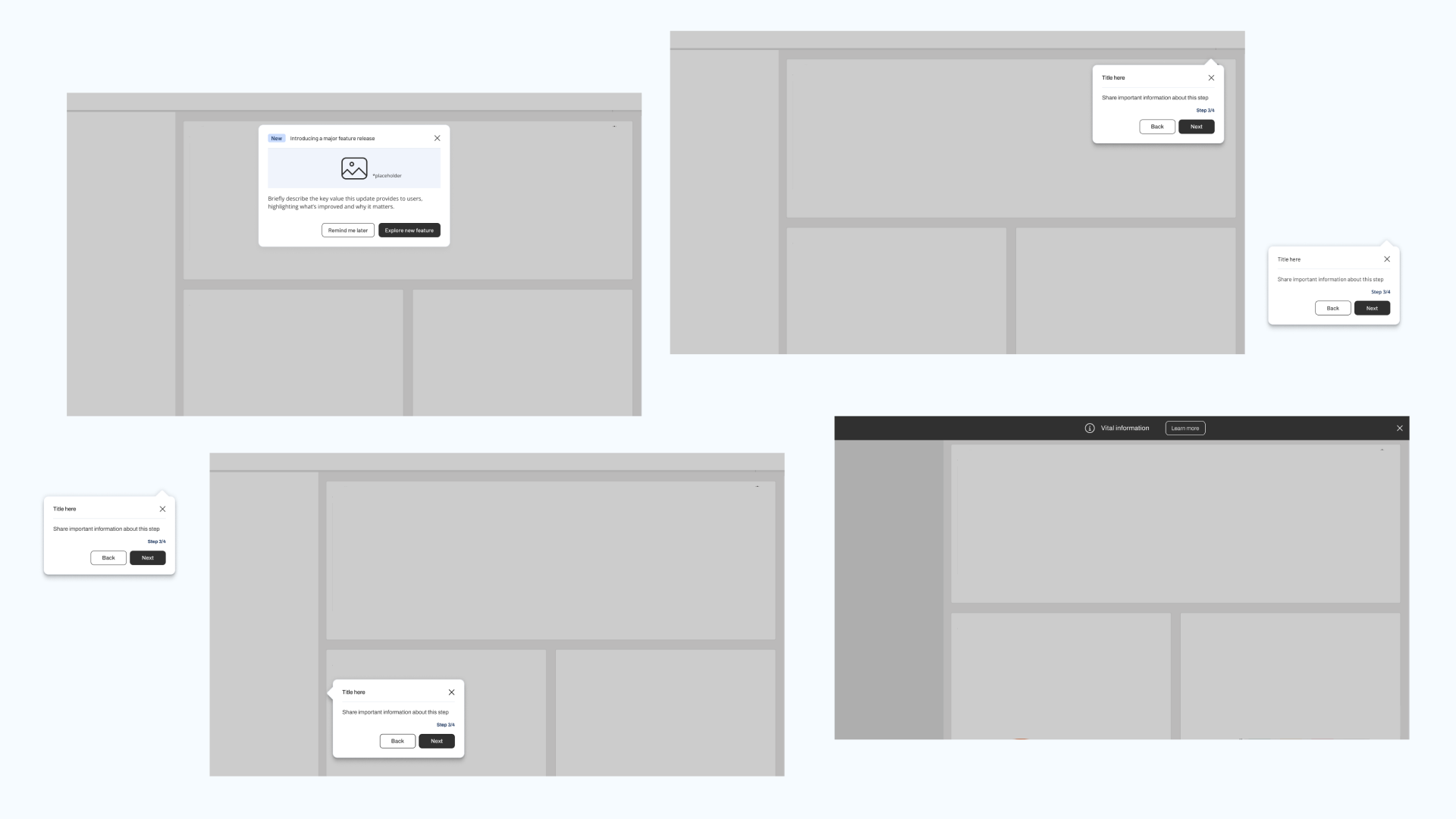
I defined a unified system for product communication based on message intent, urgency, and persistence, giving teams a clear way to decide how and when to communicate.
This included:
• Standardized interaction patterns (banners, toasts, modals, walkthroughs)
• Reusable components for consistent implementation across teams
• Clear guidance documentation to help teams choose the right message type based on context, user impact, and communication goals
This work created a repeatable system for launching, guiding, and supporting product changes, improving consistency across teams and reducing one-off communication decisions.
I partnered closely with Product, Engineering, CSM, and Customer Experience to roll out the framework, then helped socialize the system across the organization so teams beyond the original project could adopt it confidently.
As adoption grew, a new problem emerged: messaging became easier to create, and easier to overuse. Teams now had a shared system, but no shared discipline around when not to use it, and no oversight into how it was being applied across the platform’s individual product apps.
This shifted the work from designing components to shaping how communication is managed over time. Working with the team, I introduced guardrails to reduce message fatigue: required end times, limits on concurrent messages, and review of cross-product messaging journeys before launch. I also helped establish clearer ownership across teams, so messaging decisions weren't made in isolation.
It pushed me toward a broader lesson: systems don't just need to be usable, they need to guide behavior over time.